
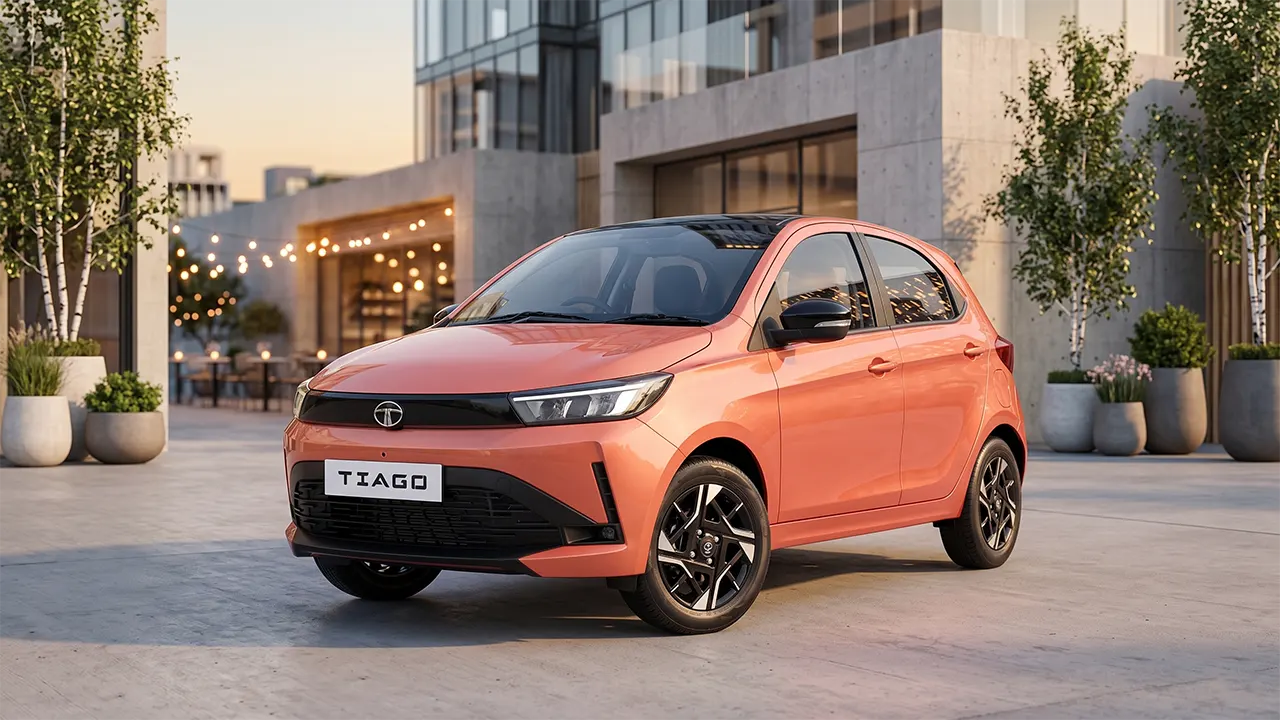
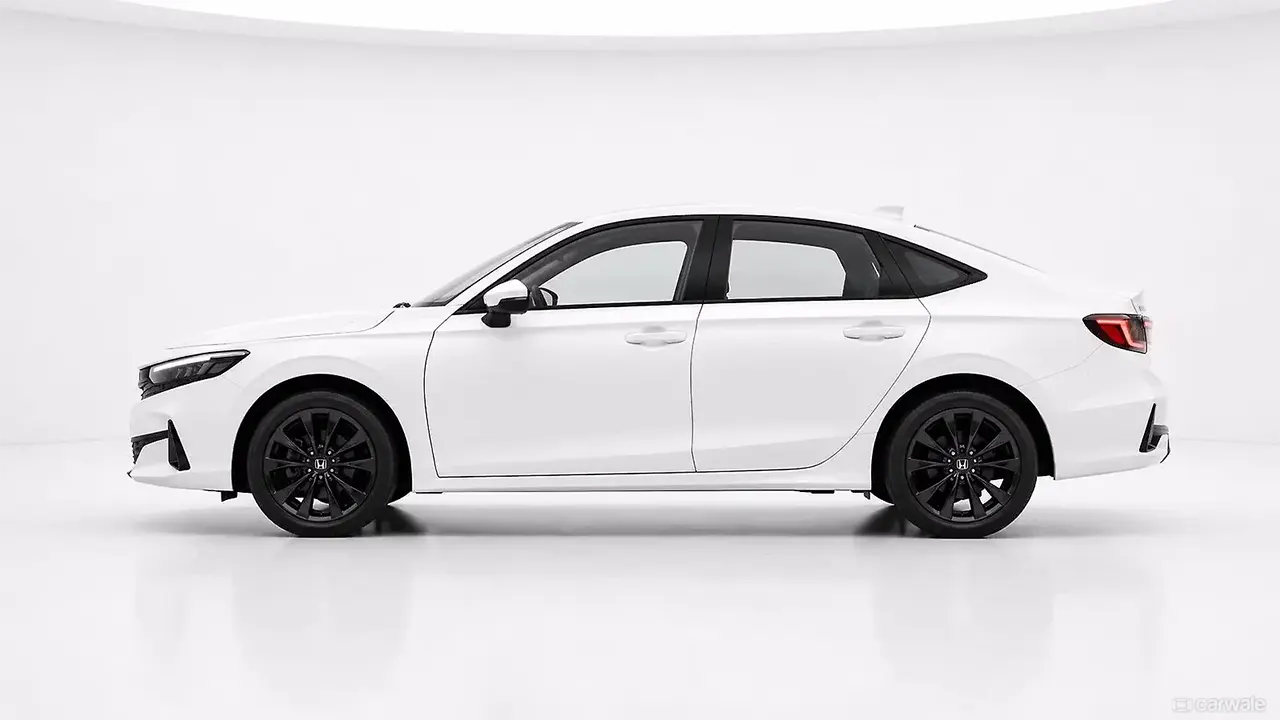

- Second-generation update: The 2026 Tiago breaks away from its rounded past with a flatter, more aggressive face inspired by the Altroz.
- Tech Overload: It now features a massive 10.25-inch infotainment unit and a 360-degree camera—tech usually reserved for cars two segments higher.
- Launch Date: Tata Motors will officially announce the pricing for both the ICE and EV versions on May 28, 2026.
The Tata Tiago has always been that spunky little hatchback that refused to feel “cheap,” even when its price tag suggested otherwise. But let’s be honest, the design was starting to feel a bit too familiar. For 2026, Tata has decided to stop playing it safe. The second-generation Tiago, which broke cover just ahead of its May 28 launch, is less about “cute” and more about “cutting-edge.”
A Face That Means Business
The first thing that hits you is the new upright front fascia. Gone is the soft, smiling grille; in its place is a sleek, gloss-black panel that bridges the gap between two very sharp LED headlamps. It has a much wider, more purposeful stance now, almost like a “mini-Altroz,” which is a compliment in my book. The bumper looks chunkier, too, with vertical elements that house the fog lamps, giving it a bit of visual mass that was missing before.
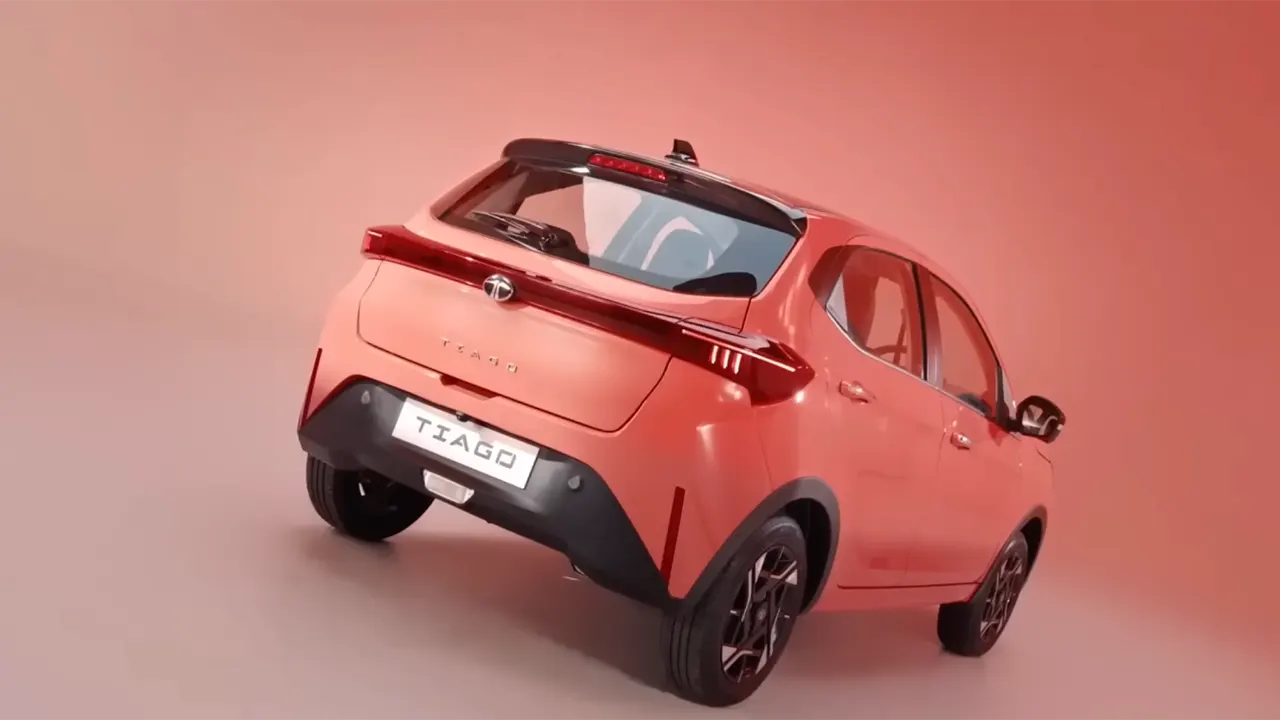
Interestingly, Tata has shod the top-spec trims with 16-inch dual-tone alloy wheels. In a car this size, that is a massive statement. It fills the arches beautifully, and when combined with the blacked-out roof and shark-fin antenna, the Tiago finally looks like a hatchback you’d buy because you want it, not just because you need it.
The Cabin: Where the “Magic” Happens
If the exterior didn’t convince you of the generational leap, the interior certainly will. The dashboard has been completely overhauled to accommodate a free-standing 10.25-inch touchscreen. It’s crisp, fast, and supports wireless Apple CarPlay and Android Auto. But the real “mic drop” moment is the 360-degree camera system. Integrating four cameras into a budget hatchback is a bold move by Tata, and it effectively kills any parking anxiety for new drivers.
You also get the illuminated logo on the two-spoke steering wheel, a 10.25-inch fully digital instrument cluster, and a wireless charging pad. The material quality feels a notch higher, with fresh upholstery patterns that make the cabin feel airy and modern. It’s clear Tata is banking on “feature-richness” to fend off the likes of the Maruti Swift and Hyundai Grand i10 Nios.
Familiar Grunt, Refined Manners
Under the hood, Tata has stuck with the proven 1.2-litre, three-cylinder Revotron engine. Now, some might moan about not getting a turbo, but for city commutes, this motor is a gem. It produces 86 PS and 113 Nm of torque, which is plenty of pep for darting through traffic. You still get the 5-speed manual and the 5-speed AMT options. Having spent time with this engine before, I expect the NVH levels to be even better this time around, thanks to improved damping and a more rigid platform.
The iCNG variant continues to be the sensible choice for high-mileage users, utilizing Tata’s brilliant twin-cylinder tech to keep the boot space usable. Meanwhile, the Tiago.ev gets the same styling updates but retains its 19.2kWh and 24kWh battery packs, offering a real-world range that remains the benchmark for entry-level EVs.
The Final Word
With prices expected to start around Rs. 4.60 lakh (ex-showroom), the 2026 Tiago isn’t just a facelift; it’s a re-calibration of what a “budget hatch” should offer. By adding high-end tech like a 360-degree camera and 16-inch wheels, Tata is making a play for the premium crowd without losing the value-for-money core. If the ride quality remains as pliant and “sorted” as the outgoing model, Tata might just have another winner on its hands when the prices drop on May 28.